
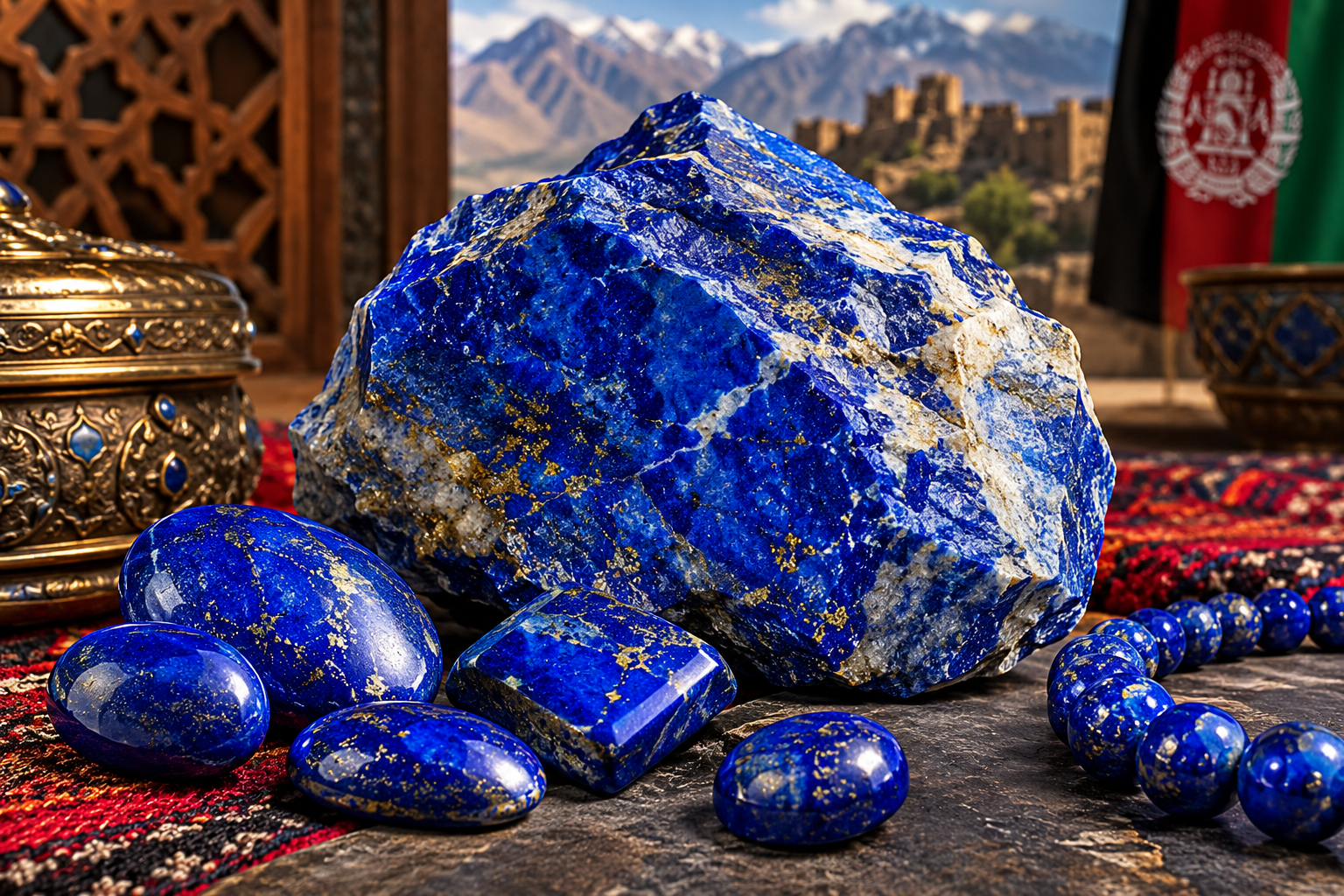

Afghan Lapis Lazuli: The Blue Treasure of Afghanistan
Deep blue, naturally captivating, and rich in history, Afghan Lapis Lazuli is one of the most distinctive gemstones associated with Afghanistan. For centuries, this remarkable stone has been admired for its intense blue color, golden pyrite inclusions, and unique natural patterns.
What Is Lapis Lazuli?
Lapis lazuli is not a single mineral but a metamorphic rock composed mainly of the blue mineral lazurite, together with minerals such as calcite and pyrite. Its most desirable varieties display a rich, intense blue color with minimal white calcite and attractive, evenly distributed golden pyrite flecks.
The combination of deep blue and natural golden inclusions gives high-quality lapis lazuli its characteristic appearance and makes every piece naturally unique.
The Origin of Afghan Lapis Lazuli
Afghanistan is internationally renowned for its exceptional lapis lazuli deposits, particularly in Badakhshan Province in northeastern Afghanistan. The historic deposits around Sar-e-Sang have been associated with lapis lazuli production for thousands of years.
The stone is extracted from mountainous regions where it occurs within metamorphic rocks. Traditional mining methods and difficult mountain terrain have contributed to the distinctive character and limited availability of many Afghan lapis lazuli specimens.
Color and Quality
The quality of lapis lazuli is generally judged by several characteristics:
- Color: Rich, saturated royal blue to deep blue is highly desirable.
- Uniformity: A strong, consistent blue color is often preferred.
- Calcite: White or gray calcite can appear naturally within the stone. Lower amounts are generally preferred in premium-quality material.
- Pyrite: Tiny golden pyrite inclusions can create beautiful natural patterns and are considered an attractive feature when well distributed.
- Texture and polish: Fine-grained material can take a smooth, attractive polish and is particularly valued for jewelry and decorative objects.
Because lapis lazuli is a natural rock, no two pieces are exactly alike. Its variations in color, pyrite, and mineral patterns are part of its natural beauty.
A Stone With Thousands of Years of History
Lapis lazuli has been valued since ancient times. Archaeological evidence shows that lapis lazuli from the region of present-day Afghanistan traveled along ancient trade routes to distant civilizations.
Ancient cultures used the stone for jewelry, amulets, ornaments, carvings, decorative objects, and pigments. Ground lapis lazuli was historically processed into the brilliant blue pigment known as ultramarine, which became highly prized in art.
Its intense blue color made it a symbol of beauty, prestige, and luxury across different periods and cultures.
Afghan Lapis Lazuli in Jewelry
Today, Afghan lapis lazuli is commonly fashioned into:
- Rings
- Necklaces
- Bracelets
- Earrings
- Beads
- Pendants
- Cabochons
- Carved ornaments
- Decorative objects
Its deep blue appearance works particularly well with silver, gold, and traditional Afghan jewelry designs.
Lapis Lazuli for Collectors and Decorative Arts
Beyond jewelry, high-quality lapis lazuli is also collected as a natural specimen and used in decorative art. Large pieces with exceptional color and attractive pyrite patterns can become impressive display objects.
Afghan lapis lazuli is especially appreciated by collectors who value its natural origin, geological character, historical significance, and distinctive appearance.
How to Care for Lapis Lazuli
Lapis lazuli has a Mohs hardness of approximately 5–5.5, making it softer than many common gemstones. It should therefore be treated with care.
For everyday care:
- Avoid strong chemicals and harsh cleaning products.
- Avoid prolonged exposure to heat.
- Do not use abrasive cleaners.
- Clean gently with a soft, slightly damp cloth.
- Store it separately from harder gemstones to prevent scratches.
Proper care helps preserve the stone’s natural color, polish, and beauty for many years.
How to Recognize Natural Lapis Lazuli
Natural lapis lazuli can show variations in color, pyrite, calcite, and texture. These natural characteristics are important when evaluating a specimen.
However, appearance alone cannot always determine whether a stone is completely natural, treated, dyed, reconstructed, or imitation. For valuable specimens, professional gemological or mineralogical testing and reliable provenance are recommended.
Why Afghan Lapis Lazuli Is Special
Afghan lapis lazuli represents more than a beautiful blue stone. It connects Afghanistan’s mountains, ancient history, traditional craftsmanship, geology, and international trade in one remarkable natural material.
Its intense blue color, natural golden pyrite, ancient history, and association with the mountains of Badakhshan have made Afghan lapis lazuli one of Afghanistan’s most recognizable natural treasures.
Discover the Beauty of Afghan Lapis Lazuli
From a raw stone emerging from the mountains of Badakhshan to a carefully polished gemstone used in fine jewelry, every piece of Afghan lapis lazuli carries its own natural character.
Explore authentic Afghan lapis lazuli and discover the timeless beauty of one of Afghanistan’s most treasured stones.
0 Comments